
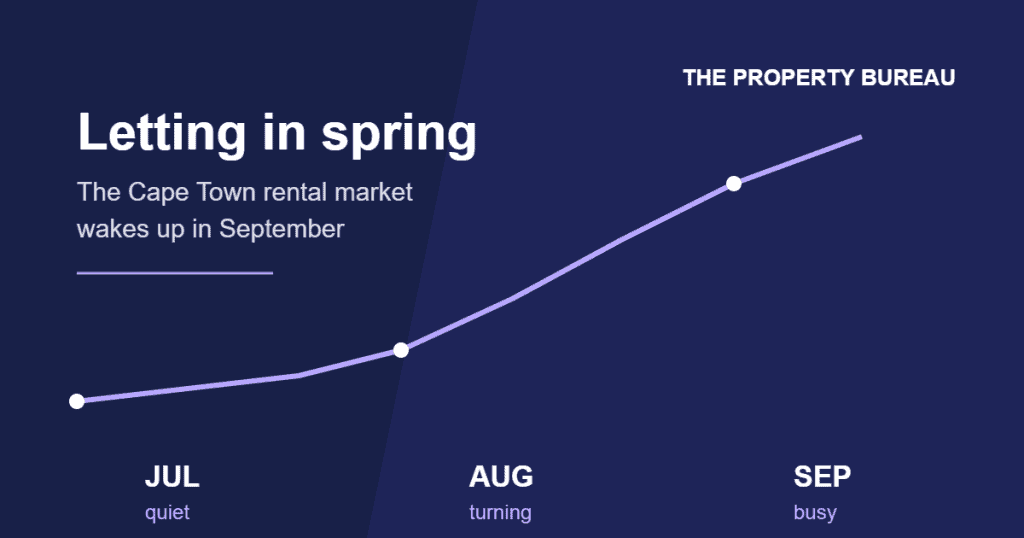
Letting in spring in Cape Town works because demand returns after winter, and a well presented, correctly priced property meets a full pool of tenants again. At The Property Bureau we have let and managed homes since 2007, and we see the turn every year across Cape Town’s Southern Suburbs, from Rondebosch and Claremont to Kenilworth and Wynberg.
Most landlords assume a good property lets itself, whatever the month. It does not. The calendar shapes the Cape Town rental market more than people expect, and letting in spring is a different exercise from letting in the middle of winter.
Every year we see the same pattern. Winter slows everything down. Then, somewhere in September, it turns. It has turned again this year: properties are coming on, interest is strong and pricing is holding well.
In short:
- Winter is quiet. Fewer people move, fewer properties come on and enquiries thin out.
- Spring brings the tenants back, and a well presented property meets a full pool of applicants.
- Strong demand rewards good pricing and fast decisions. It does not reward overpricing.
- If your lease ends over summer, the time to plan is now.
Winter is quiet, and it is supposed to be
Nobody wants to move house in the rain. Through the Cape winter, fewer tenants are looking, and the ones who are tend to be moving because they have to, not because they want to. Landlords feel it as slower enquiries and longer gaps between viewings.
That is not a sign that something is wrong with the property. It is the season. The mistake is reading a quiet July as a verdict on the rent and cutting it, when all the property needed was a different month.
Why spring turns the market
As the weather lifts, people start planning. Leases are coming up, households are ready to move, and the tenants who sat tight through winter come back into the market together. What I am describing is what we see on the ground across our own listings, not a published statistic, and I would rather say so than dress it up with a number. If you want the published figures, PayProp’s quarterly Rental Index tracks rents by province.
The effect is simple. The same property that drew a trickle of interest in June can draw a queue in September.
What to do if you are letting in spring
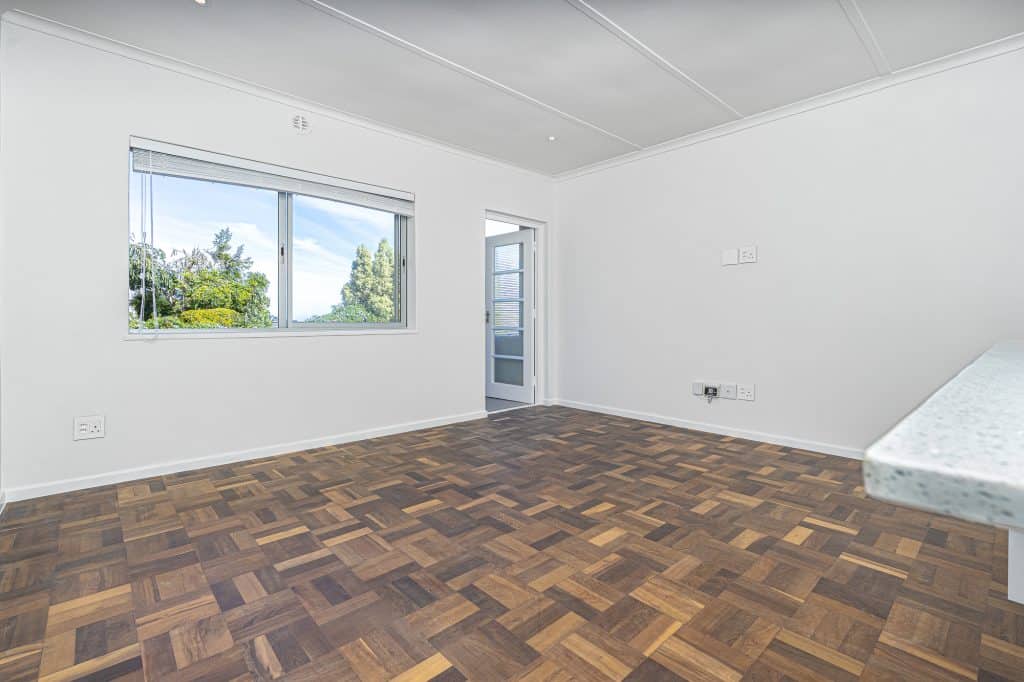
- Present it properly. A clean, finished, well photographed property is what the good applicants pick first. Half-finished maintenance costs you more in a busy month, because there is always something ready next door.
- Price it right from day one. The first two weeks carry the most interest. A realistic rent uses that; an ambitious one wastes it.
- Be ready to say yes quickly. Good applicants have options in spring. The landlord who can approve within a day or two gets the better tenant.
- Have the paperwork ready. The lease, the inspection and the deposit arrangements should be prepared before the first viewing, not after the first application. The Rental Housing Act 50 of 1999 already requires a joint inspection with the tenant before they move in and the deposit to be held in an interest-bearing account (section 5), so none of this is optional.
Strong demand is not permission to overprice
This is where spring catches landlords out. Interest is up, so it feels safe to push the number. But tenants in a busy market compare everything, and a property priced above what it offers simply gets skipped. It then sits while the comparable properties around it let, and a stale listing loses the advantage the season gave it.
The better play is the right rent, set early, with the property ready to show. That is what fills it with the best applicant rather than the last one.
If your lease ends over summer, start now
Renewals and new placements for the months ahead should be settled while the market is strong, not in the final weeks of a lease. Talk to your tenant early. If they are staying, agree it. If they are going, you want the property on the market while spring demand is still running.
It is a small thing, and it is the kind of thing we try to take off your plate entirely. A renewal settled in good time is one less month of uncertainty for the owner, and one less thing for the tenant to chase.
How we handle the spring rush
Busy months create their own problem: more interest than properties. Every applicant is assessed in person first, then through a PayProp credit check, TPN verification, or both. Complete is not the same as approved: a form can be filled in perfectly and still fail on credit, affordability or references. Applications are assessed in the order they are completed. Our preference is to put two or three approved applications in front of the owner to give them a choice, although often only one meets our criteria. Either way, the owner decides. How we assess an applicant is set out in full in How I Assess a Prospective Tenant.
It also means a viewing can occasionally be cancelled because the property has already been secured. When that happens we cancel as early as we can, and anyone affected hears first about similar properties.
That is the whole approach in one line: let in the season, price it honestly, and be ready to decide.
Letting this spring?
If you are weighing up whether to let now or wait, a free 30-minute Mandate Review will give you a straight read on what your property should achieve and when to bring it to market. We manage at a flat 11.5% of monthly rent collected, fully inclusive, with no extras, run personally by a PPRA registered Property Practitioner. More for landlords at Landlord Services and Property Management Cape Town. Before signing anything, our guide What to Check Before Signing a Lease in South Africa is worth ten minutes. If you would like a number first, start with a rental valuation. Tenants looking this spring can see what is available on our rentals page.
Frequently asked questions
Is spring the best time to let a property in Cape Town?
In our experience it is one of the strongest periods, because demand returns after the winter slowdown. A well presented, well priced property listed in spring usually meets more applicants than the same property listed in winter.
Should I raise the rent because demand is up?
Only if the property justifies it. Demand rewards the right price, not the highest one. An overpriced listing gets skipped and sits, which costs more in vacancy than a realistic rent would have lost.
My property is not ready yet. Should I rush it?
Finish it properly first. A half-ready property shown in a busy month compares badly with everything around it. A week spent finishing usually lets faster than a month spent on the market unfinished.
My lease ends in summer. When should I start planning?
Now. Talk to your tenant early. If they are staying, agree the renewal. If they are going, you want the property ready and on the market while spring demand is still running, not in the final weeks of the lease.
How does The Property Bureau choose a tenant in a busy month?
We assess every applicant in person, then run a PayProp credit check, TPN verification, or both. Applications are assessed in the order they are completed. Where we can, we put two or three approved applications in front of the owner to give them a choice, but often only one meets our criteria. Either way, the owner decides.
Written by Paul Grobler, principal of The Property Bureau, a PPRA registered residential letting, management and sales agency in Cape Town since 2007.
Sources: The Property Bureau’s own letting activity across Cape Town; Rental Housing Act 50 of 1999, section 5; PayProp Rental Index. This article deliberately uses no market statistics. Checked 25 September 2026. General information, not legal advice.
