
When someone you love has died, we look after the property until you are ready to decide what happens to it.
In short
- We look after homes and rentals in deceased estates across Cape Town, on the executor’s instruction.
- We take the urgent property worries off the family: security, the tenant, the rent and repairs.
- Rent is collected through PayProp and paid into the estate’s bank account, with statements for the estate accounts.
- Keep, let or sell. There is no pressure to decide, and the choice and the timing stay with the heirs.
- Owner-run since 2007. You deal directly with the principal.
The Property Bureau looks after homes and rentals in deceased estates across Cape Town, holding each property safely until the family is ready to decide. We work on the executor’s instruction, alongside the attorney winding up the estate, and we take the day to day property worries off a family that already has enough to deal with. We cover the Southern Suburbs, from Constantia, Claremont and Rondebosch to Wynberg and Kenilworth, as well as the Atlantic Seaboard, the City Bowl and the False Bay coast.
What do I do right now?
It is the first question almost every family asks us, and the honest answer is: less than you think. You do not have to know yet.
For many people this is the first time they have had to deal with property at all. A mother or father looked after it for years, quietly and well. Then they die, and in the same week their children are arranging a funeral, hunting for documents and taking calls from a tenant they have never met.
Feeling overwhelmed at that point is normal. So is not being able to see the wood for the trees. Nobody expects you to understand leases, estate accounts and the Master’s office in the first week.
So make one phone call. We hold the property safely, keep it earning where it can, and give you the time to deal with everything else first.
What we take off your hands
- A first visit. We inspect the property, check that it is locked and secure, and send the executor a condition report with photographs. An empty house is the biggest risk, so it comes first.
- The tenant. We tell the tenant who they now deal with, collect the rent through PayProp and pay it into the estate’s bank account.
- An empty property. If the executor agrees, we find a tenant, screen them with a PayProp credit check, a TPN verification or both, and put a lease in place with a term that fits the expected time to transfer or sale.
- Repairs. Nothing is instructed without the executor’s agreement, and every job is reported back with photographs.
- The paperwork. Monthly PayProp statements that the executor and the estate’s attorney can take straight into the estate accounts.
- Family far away. Heirs overseas or in another city get the same reports and approve decisions by email or WhatsApp, without having to fly in.
What happens to a property when the owner dies?
The estate must be reported to the Master of the High Court within 14 days of the death. The Master then appoints an executor, by Letters of Executorship where the estate is worth more than R250 000, or by a Letter of Authority under section 18(3) of the Administration of Estates Act where it is worth less. From that point the executor takes control of the estate’s property and must open a bank account in the estate’s name.
An existing lease generally does not end because the landlord has died. The tenant stays, the lease runs on its own terms, and the rent is owed to the estate.
Three ways to handle the property while the estate is wound up
- Leave it locked up. Nothing to arrange at first. But an empty house is exposed to break-ins and damage that nobody notices, and the rates, levies and bond keep running with no income against them.
- A family member looks after it. This can work when someone lives nearby and has the time. It means dealing with the tenant, the contractors and the paperwork yourself, and keeping records the executor can use in the estate accounts.
- A managing agent on the executor’s instruction. One person to call, the rent collected into the estate account, and statements ready for the estate accounts. It carries a management fee.
For most families with a property that is let, or could be, the third option costs the least in time and worry. Where someone in the family lives close by and the property is simple, the second can work well too.
Keep, let or sell. There is no rush.
Once the estate is in order, the heirs decide what happens to the property. Some keep it and let it out, some move in, some sell. We do not push either way. We will tell you honestly what the property is likely to fetch as a rental and as a sale, so the decision rests on facts.
If you keep it, we carry on managing it for you. Letting is the core of what we do. If you decide to sell, we would like to handle the sale, starting with a written market appraisal, but there is no obligation. It is your family’s property, not ours. If you would rather use someone else, we hand over the keys, the lease and the records cleanly. That is how an agency should behave at all times. At a time like this, it matters even more.
Why families and executors use The Property Bureau
We are an owner-run agency, working in Cape Town since 2007, and we already look after properties held in family trusts, testamentary trusts and deceased estates. You deal directly with the principal, and the same people handle your property from the first call to the end. We are PPRA registered, rent runs through PayProp, and every rand is accounted for. Where an estate passes into a testamentary trust for younger heirs, see our trust portfolio management.
Where our role stops
We are not attorneys and we do not administer estates. The executor, usually with an attorney, winds up the estate. We look after the property, report to the executor, and work alongside the attorneys and accountants involved. This page is general information, not legal advice.
Deceased estate property questions, answered
Does a lease end when the landlord dies?
Generally no. The lease carries on and the rent is paid to the estate, unless the lease itself says it ends on the landlord’s death. The executor steps in on the landlord’s side, and we can run the tenancy on the executor’s instruction.
Who can sign a property management mandate for a deceased estate?
The executor named in the Letters of Executorship, or the representative named in a Letter of Authority for estates worth less than R250 000. We ask for a copy before we sign, and we report to the executor until the property is transferred or sold.
Can a property in a deceased estate be let while the estate is wound up?
Yes, if the executor agrees. Letting brings income into the estate and puts someone in an otherwise empty house. The executor decides, usually with the estate’s attorney, and we recommend a lease term that fits the expected time to transfer or sale.
Do the heirs have to sell the property?
Not necessarily. Where the will allows it and the estate can settle its debts without selling, the property can be transferred to the heirs, who may keep it, let it or sell it later. The executor and the estate’s attorney will confirm what applies in your case.
What if the family lives overseas?
We already manage properties for owners who live abroad. Reports, statements and approvals are handled by email and WhatsApp, so heirs overseas do not need to travel to Cape Town to keep things moving.
Talk to us
Call the office on 021 797 8850, WhatsApp us on +27 65 847 5310, or send the address and the executor’s details through our contact page. Before we sign a mandate we ask for a copy of the Letters of Executorship or Letter of Authority, the executor’s FICA documents and any existing lease.
If the executor has not been appointed yet, call anyway. We will explain what needs to happen first, so the property is not left unattended longer than it has to be. We know this call comes at a sad and difficult time. We will keep it simple, and we will keep you informed.
Sources: Master of the High Court, Deceased Estates, Department of Justice, checked 27.09.2026. Administration of Estates Act 66 of 1965, sections 13, 18(3), 26 and 28. Reviewed September 2026.
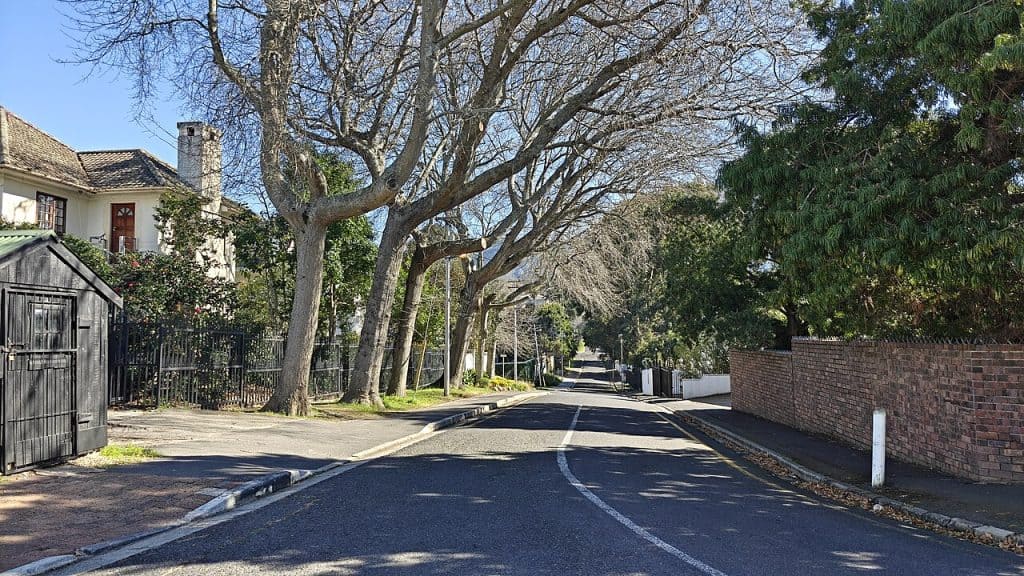
Photo: Oak Avenue, Kenilworth, by Husskeyy, Wikimedia Commons, CC BY-SA 4.0.
